Blogs Details
Smart Home Integration in New Construction – Complete 2026 Guide for Modern Homes
Smart homes are no longer a luxury — they are becoming a standard feature in modern house construction, especially in growing tech cities like Bangalore.
If you are building a new home in 2026, integrating smart home technology during construction is far more cost-effective and efficient than adding it later.
This detailed guide explains:
- What smart home integration means
- Why you should plan it during construction
- Step-by-step implementation process
- Cost estimation
- Best smart features for Indian homes
- Mistakes to avoid
Whether you’re building a 30x40 house, duplex villa, or luxury residence — this guide will help you future-proof your home.
📌 What Is Smart Home Integration?
Smart home integration means connecting various systems in your home to a centralized control platform so you can manage them through:
- Smartphone apps
- Voice assistants
- Touch panels
- Remote access
These systems include:
- Lighting
- Security cameras
- Door locks
- Air conditioning
- Curtains
- Appliances
- Entertainment systems
Instead of separate switches and remotes, everything works through a unified automation system.
Why Integrate Smart Home Technology During Construction?
Many homeowners make the mistake of adding automation after house completion. But integrating smart systems during construction offers major advantages:
✅ 1. Hidden Wiring Planning
Conduits and cables can be embedded neatly inside walls.
✅ 2. Cost Savings
Retrofitting automation later can cost 20–30% more.
✅ 3. Better Aesthetic Finish
No exposed wires or extra drilling.
✅ 4. Scalability
You can plan for future upgrades.
If you're constructing a new home, planning smart features at the design stage is ideal.
Types of Smart Home Systems
Smart home solutions are generally divided into three categories:
1️⃣ Lighting Automation
- Scene-based lighting (Movie Mode, Party Mode, Night Mode)
- Motion sensors
- Dimming control
- Scheduled lighting
2️⃣ Security & Surveillance
- Smart CCTV
- Video door phone
- Smart door locks
- Motion detection alerts
3️⃣ Climate & Energy Management
- Smart thermostats
- AC control via app
- Smart fans
- Solar monitoring systems
Step-by-Step Smart Home Integration Process During Construction
🏗️ Step 1: Requirement Discussion & Planning
During architectural planning:
- Identify automation areas
- Decide room-wise control needs
- Select centralized or wireless system
- Plan server/control room location
This step should happen before electrical layout finalization.
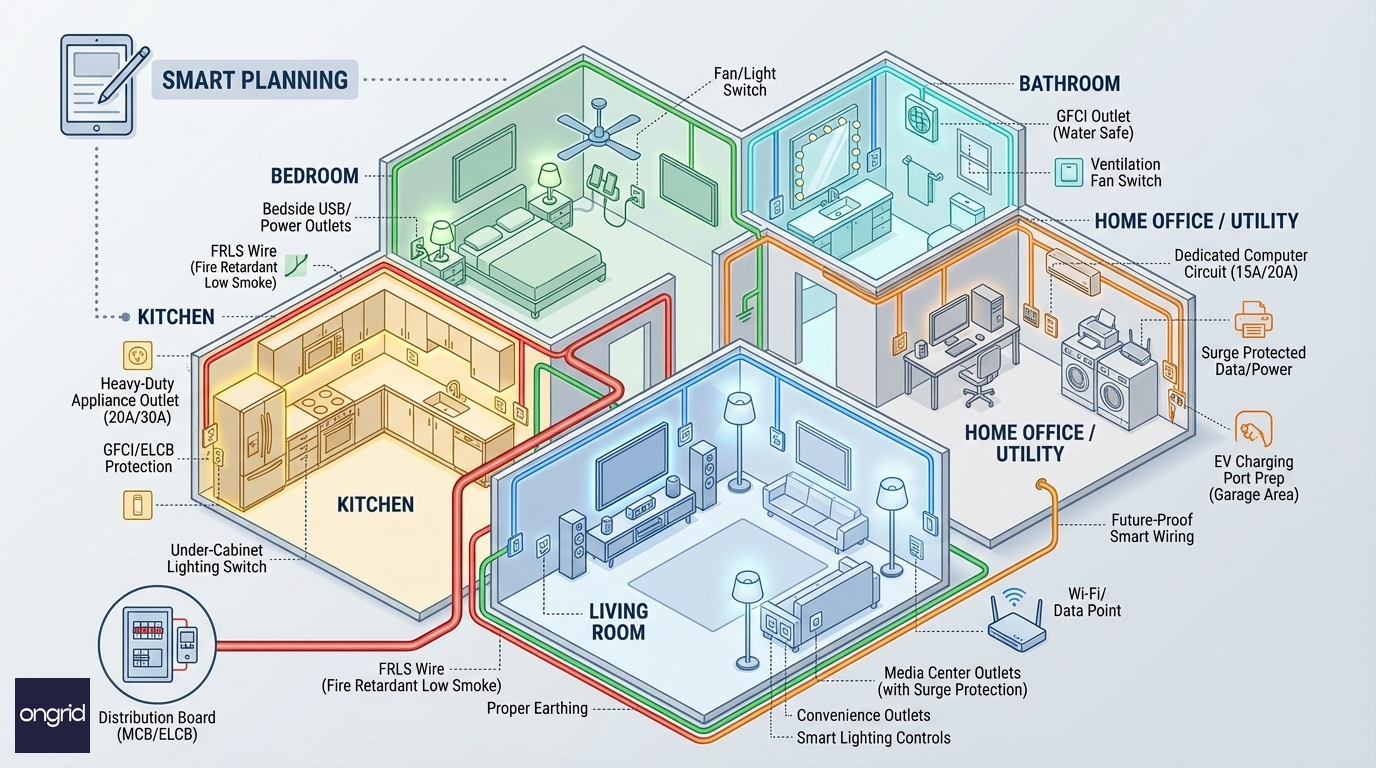
📐 Step 2: Electrical Layout Customization

Your electrical consultant must:
- Provide extra conduits
- Separate automation circuits
- Install structured wiring panel
- Provide CAT6 network wiring
Structured wiring ensures smooth performance.
🧱 Step 3: Conduit & Cabling During Slab Work
During slab casting:
- Lay conduits for automation
- Provide extra switch box depth
- Install centralized control box (if required)
This stage is critical because post-construction drilling damages walls.
⚙️ Step 4: Installation of Smart Modules
After plastering and before final painting:
- Install smart switches
- Connect control modules
- Set up gateway device
- Configure network
Popular ecosystems work with voice assistants like:
- Amazon Alexa
- Google Nest
📱 Step 5: Software Configuration & Testing
- App setup
- Scene creation
- Security system testing
- Load balancing
- Backup power testing
Everything must be tested before final handover.
💰 Smart Home Integration Cost in India (2026 Estimate)
|
Home Type |
Basic Automation |
Premium |
Luxury Full Automation |
|
2BHK (1200 sq ft) |
₹1.5 – ₹3 Lakhs |
₹4 – ₹6 Lakhs |
₹8+ Lakhs |
|
30x40 G+1 |
₹3 – ₹6 Lakhs |
₹7 – ₹12 Lakhs |
₹15+ Lakhs |
|
Villa |
₹5 – ₹10 Lakhs |
₹12 – ₹20 Lakhs |
₹25+ Lakhs |
Cost depends on:
- Wired vs wireless system
- Brand quality
- Number of circuits
- Customization level
🏠 Must-Have Smart Features for New Homes
💡 1. Smart Lighting Scenes
- Wake-up mode
- Night security mode
- Away mode
🔐 2. Smart Door Lock
- Fingerprint access
- OTP access for guests
- Remote unlock
📷 3. Smart CCTV with Cloud Storage
- Mobile access
- Motion alerts
🌡️ 4. Climate Automation
- Auto AC shut-off when window opens
- Scheduled temperature control
🎬 5. Home Theatre Automation
- One-touch movie mode
- Curtain auto-close
- Dimming lights
🌞 Energy Efficiency Benefits
Smart homes reduce energy bills by:
- Auto light shut-off
- Smart appliance scheduling
- Real-time energy monitoring
- Solar integration
With rising electricity costs in Bangalore, this is a major advantage.
🔐 Security Advantages
Smart home integration increases safety:
- Intrusion alerts
- Fire alarm notifications
- Gas leak detection
- Remote door lock monitoring
- Panic buttons
You can monitor your house from anywhere in the world.
🏡 Wired vs Wireless Smart Systems
|
Feature |
Wired System |
Wireless System |
|
Reliability |
Very High |
Moderate |
|
Installation Stage |
During construction |
Anytime |
|
Cost |
Higher |
Lower |
|
Scalability |
Limited |
Flexible |
👉 For new construction, wired systems are recommended.
🧩 Integration with Interior Design
Smart automation works best when coordinated with:
- False ceiling design
- Lighting layout
- Modular kitchen
- TV unit paneling
- Curtain track system
Interior designers and automation consultants must collaborate early.
⚠️ Common Mistakes to Avoid
❌ Planning automation after electrical work
❌ Choosing cheapest modules
❌ Ignoring network strength
❌ Not providing UPS backup
❌ Overcomplicating controls
Keep it simple and scalable.
🚀 Future Trends in Smart Homes (2026–2030)
- AI-based lighting patterns
- Predictive energy optimization
- Biometric home access
- EV charging integration
- Smart water usage monitoring
Homes built today should be ready for these upgrades.
📊 Is Smart Home Integration Worth It?
Let’s evaluate:
|
Factor |
Benefit |
|
Property Value |
Increases resale value |
|
Rental Demand |
Attracts premium tenants |
|
Energy Savings |
Reduces bills |
|
Security |
Improves safety |
|
Convenience |
High comfort |
Yes — especially in metro cities like Bangalore, smart homes attract modern buyers.
🏁 Final Thoughts
Smart home integration in new construction is no longer optional for premium homes. Planning automation during construction ensures:
- Clean wiring
- Cost savings
- Better performance
- Future-ready infrastructure
If you are building your dream home in 2026, discuss automation requirements at the architectural planning stage itself.
A well-designed smart home:
- Saves energy
- Enhances security
- Improves lifestyle
- Increases resale value
Invest wisely and build a home that is ready for the future.